
How does Coco Peat Compare with Peat Moss - A thorough Analysis
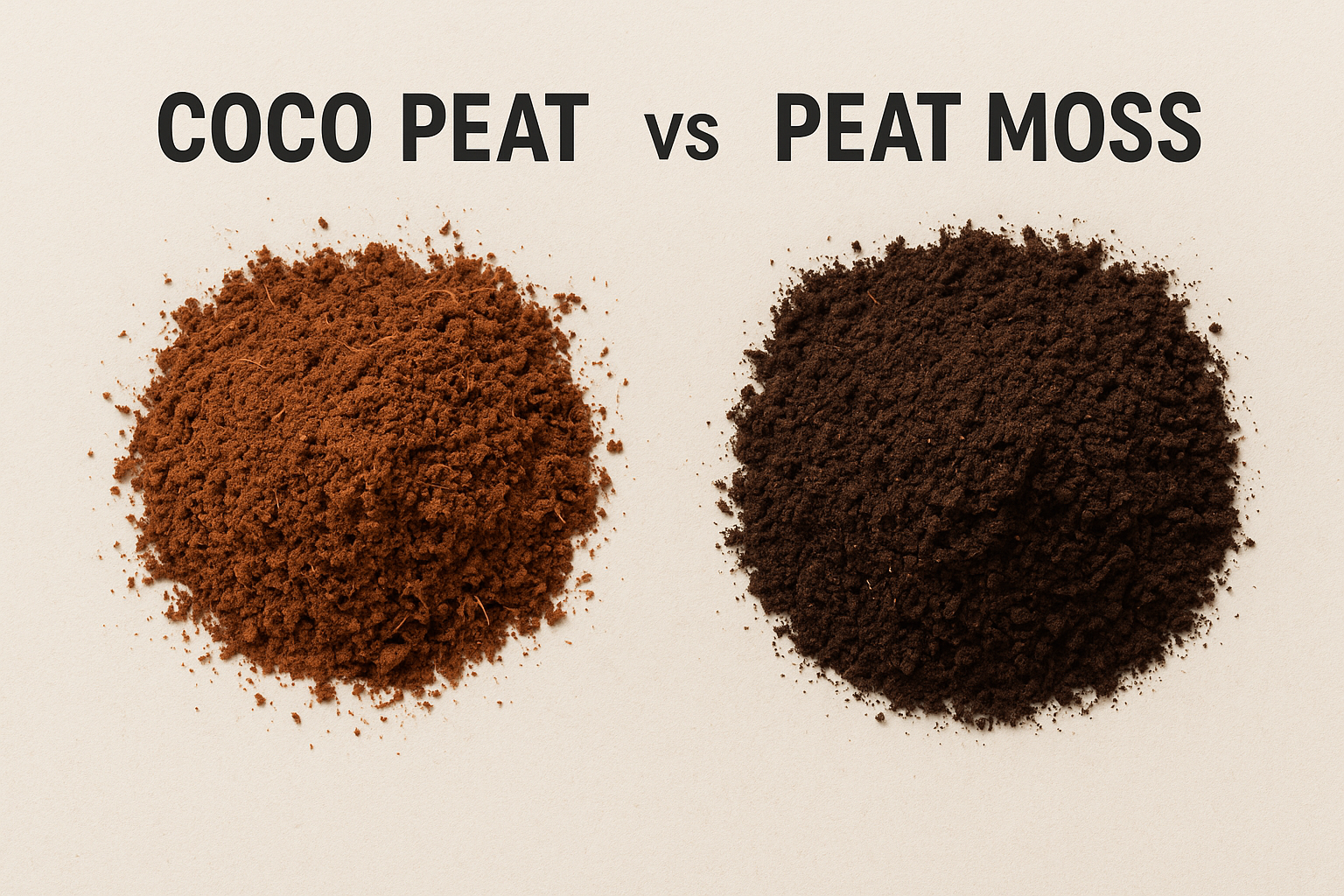
Coir pith has gained popularity as a sustainable and effective alternative to peat moss, offering several distinct advantages—both environmentally and functionally. Here's how they compare across key properties against peat moss
1. Durability & Structure Retention
Coco peat, with a lignin content of 30–55%, is highly durable and decomposes slowly, making it ideal for long-term use. Peat moss, though also durable (5–20%), breaks down faster. Coco peat also resists compaction and maintains structure even when dry, while peat moss can shrink up to 50% and struggle to regain form after rewetting
2. Water Retention & Rewetting
Peat moss absorbs up to 20 times its weight in water, while coco peat holds about 10 times. However, coco peat retains moisture longer and can be rewetted easily, unlike peat moss, which often requires a wetting agent.
3. Aeration & Moisture Balance
Coco peat’s pore space is slightly less than peat moss, but its fiber content can be adjusted to improve aeration. Peat moss offers excellent porosity initially, but may compact over time if not managed well.
4. Reusability
Peat moss typically lasts 6–12 months and is prone to decomposition, making reuse difficult. In contrast, coco peat can be reused multiple times for up to 4–5 years if sterilized properly. It can also be stored upto 10 years if done properly
5. Pest Resistance
Coco peat is naturally resistant to many pests like slugs, moths, and snails, since it doesn't decompose so quickly that feeds the pests off while peat moss—especially if stored poorly—can harbor fungal spores.
6. Ease of Handling & Transport
Compressed coco peat is easier to transport in bulk, enabling more efficient container loading. Peat moss, although compressible, is typically transported in large bales, making it harder to handle. It must remain moist during transport to avoid degradation and becoming hydrophobic. Additionally, it requires proper ventilation to prevent mold growth. If peat moss is too wet, it becomes bulky and prone to pathogens; if too dry, it risks becoming hydrophobic. Therefore, a delicate balance is needed to determine how much it can be compressed for safe transportation.
7. pH Compatibility
A lower pH level can make it difficult for plants to absorb nutrients from the growing medium. Peat moss has a pH range of 3.5 to 4.5, which is suitable for a narrow group of acid-loving plants such as blueberries, rhododendrons, and similar species.
Coco peat, on the other hand, has a pH range of 5.3 to 6.8, closer to neutral, making it ideal for cultivating a wide variety of vegetables and other exotic plants.
8. Sustainability
Coco peat is a byproduct of the coir industry, making it an eco-friendly option. Its use reduces landfill waste and avoids the environmental destruction associated with peat harvesting, which disrupts habitats, affects water cycles, and releases stored carbon into the atmosphere.
Coir pith offers all the benefits of peat moss—and more—with better water management, reusability, pest resistance, and greater sustainability. For growers seeking an eco-conscious and effective growing medium, coir pith is not just an alternative, it’s an upgrade.

Quality Assurance
We guarantee premium quality products that meet global standards.

Global Sourcing
Our products are sourced from the best producers around the world.

Customer Focused
We prioritize customer satisfaction, ensuring a seamless buying experience.

Diverse Range
Explore a wide variety of natural food products tailored to your needs.